
A Fork in the Road
Flash non-fiction. A true story.

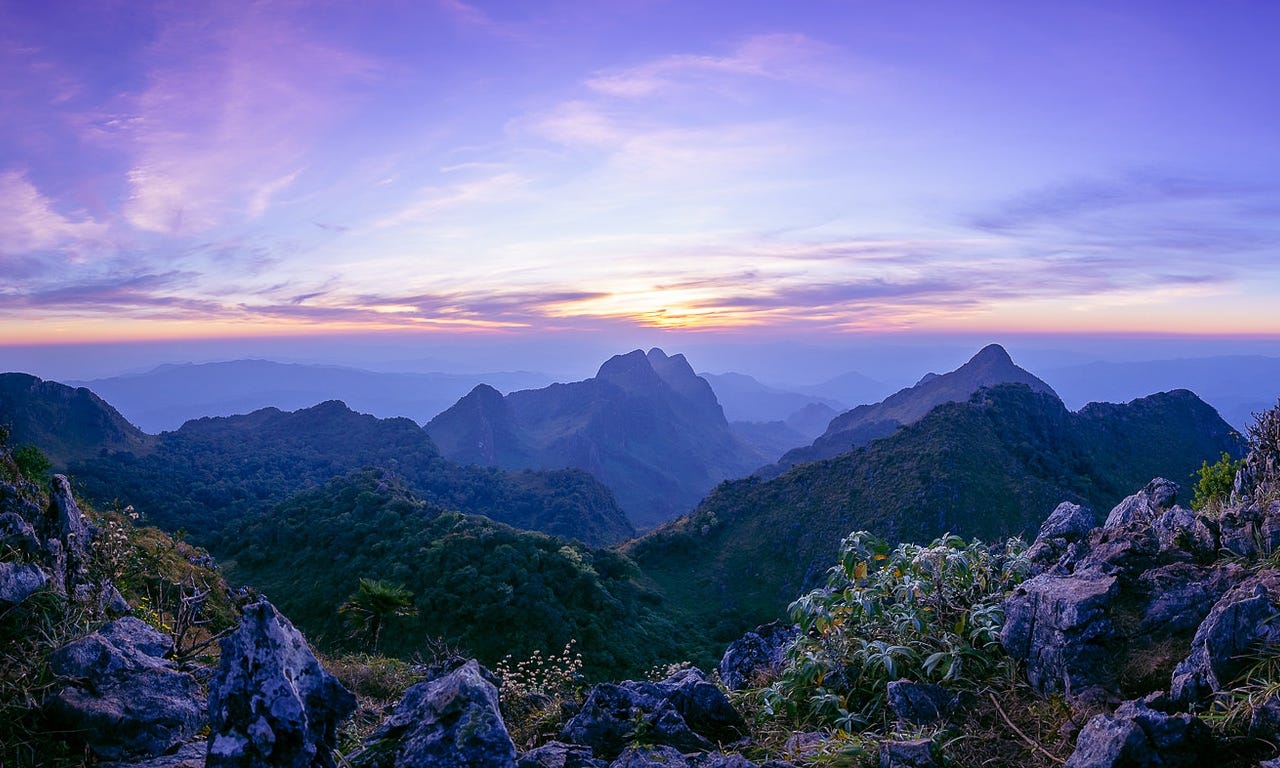
The day, after the South-West Monsoon had ended, northern Thailand presented sunshine, less than usual humidity, and relative coolness around 30c. We set out on what was planned to be a leisurely half-day trip to Chiang Dao and the Dragon’s Back Mountain range we look out on from home, when the air is not polluted. Chiang Dao is 35 kilometres north of home in Chiang Mai province.
All went well until after we paid a visit to Chiang Dao caves. Before leaving the caves, my wife, Chicky, rather excitedly informed me that the guide who led her through the narrower parts of the cave, while I rested, had given her directions to a beautiful spot 13 kms up towards the highest peak. I was taking on plenty of water and needed a coffee break and a snack, so I went along for the ride, so to speak. Chicky volunteered to be driver of the day, and when that happens, she seldom lets go of the reins. So we set off into the unknown. 13kms along a winding narrow hill-climb can seem like twice the distance, so after what seemed like four times thirteen, I said,
“Are you sure you got the directions right?’
“Yes, but he didn’t mention the fork in the road.”
“So, you made it up from there?”
“Yes.”
“Brilliant.”
“What do you want me to do?”
“Take more notice of me in future.”
Forks are normally accompanied by knives or spoons, but not when they are found in the road. When I realised it was too late, I was hoping we would find a place to turn the car round and get back to civilisation and coffee, as safely as possible. One hour and thirty minutes later, I was dizzy with the hundreds of bends and constantly looking down on the world from a height I was not accustomed to in a car. The last time I saw the world from two thousand metres I was in a plane, and my wife was not the pilot. By now, Chicky chose gears with the same random precision she picked lottery numbers. She had taken to driving on both sides of the road at the same time, and we had several near misses with vehicles who obviously knew the road better than she did. I took the less dangerous option of staying silent, choosing a petrified soaking in sweat in preference to the unthinkable alternative. Furthermore, there was no sign of a place wide enough to turn.
After stopping to speak to one or two people, who didn’t use the same version of Thai as my wife, to find out where we were heading, we eventually reached a settlement that housed more than a hermit and his dog. Fortunate, as I was worried about Chicky’s driving. She had eaten nothing since the day before and had taken on too little water. Luckily, we had plenty of it, fuel too, and I had a few biscuits. Here we found plenty of turning space and enough people to stand a chance of finding someone we could communicate with.
Chicky discovered that if we continued on, the road to Hell would end up in Hell at nightfall. Hell being a place in the middle of the jungle where the road ended!
And that was the last place you would want to end up at nightfall in the jungle.
We arrived back at Chiang Dao four hours after we left it. Chicky pretended to be okay, while I only felt marginally better after wolfing down a plate of Phad Siew Gai.
Back home, safe but with me having a raging headache, we both slept for a good twelve hours. In the morning, Chicky asked me if I enjoyed the trip. I needed some time to formulate a suitable response. So, I mumbled while poring over a map of the area and discovered, we had driven around the edge of the Daen Lao mountain range from Chiang Dao on the south side, then along the edge of the border with Myanmar on the north side towards but not connected with Mae Hong Son. Fortunately, there were no off roads into Myanmar, otherwise I probably wouldn’t be writing this story.
The moral to this story is – However stunning the scenery may be, a fork in the road may ruin the experience.
Footnotes
Daen Lao mountain range Inhabitants
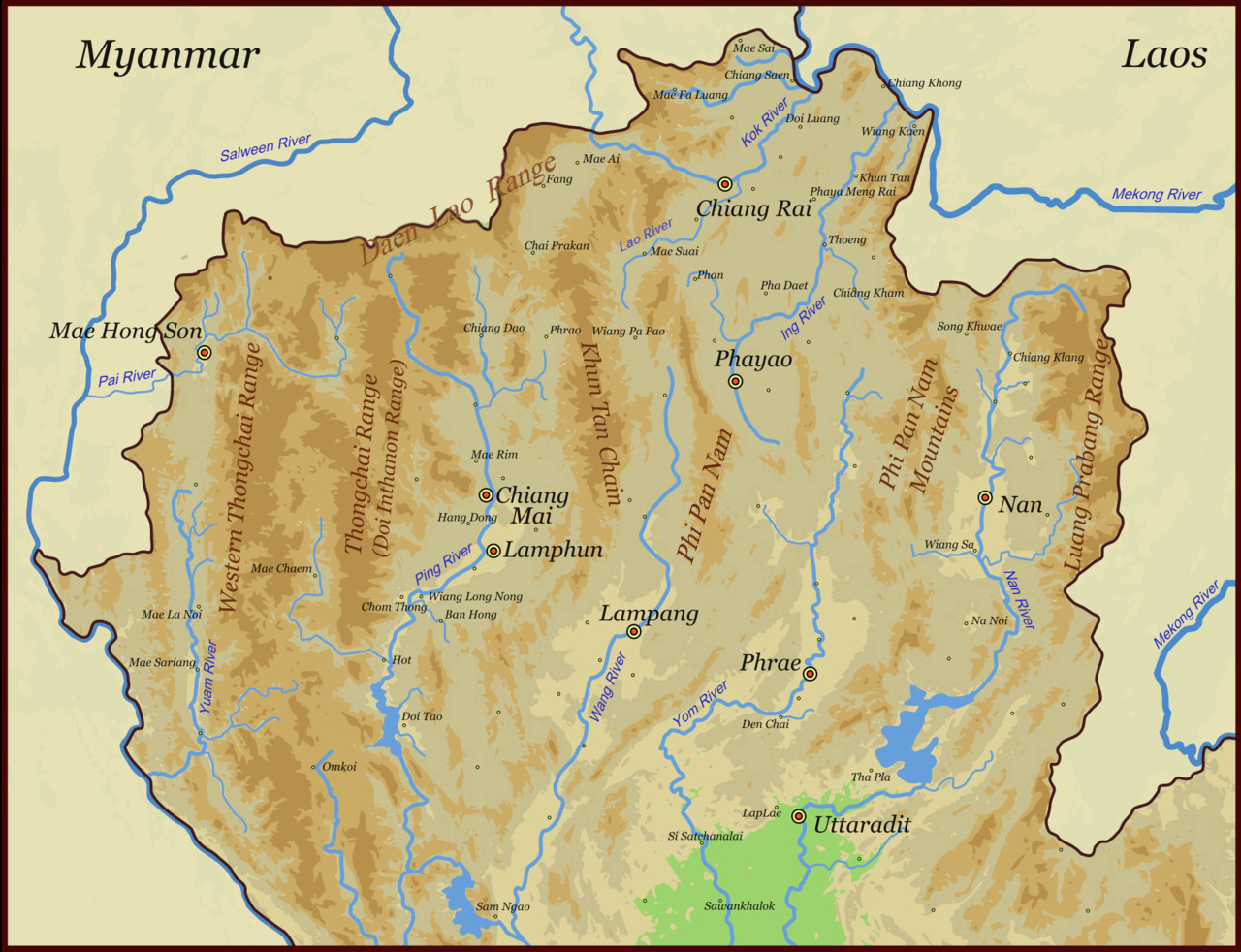
The Daen Lao mountain range is home to a variety of ethnic groups, primarily hill tribes. These include the Wa, Akha, Yao (also known as Mien), Lahu, Lisu, Shan (Tai Yai), Karen, Tai Lue, Lawa, and Palaung peoples. The population lives in scattered small villages across the range, which spans eastern Burma (Myanmar) and northern Thailand. Some of these groups migrated from China and neighboring regions, with histories linked to the area’s difficult terrain and historical conflicts.
These hill tribes traditionally practiced subsistence farming, including opium cultivation until recent decades. The area has seen some migration due to conflict, with refugee camps on the Thai side. Notably, the Akha, Lahu, and Shan have been prominent inhabitants, and there are also ethnic Chinese communities in certain places like Doi Mae Salong within the range. Most communities live at higher elevations with a rich cultural heritage tied to the mountain environment.
Conflict in the region
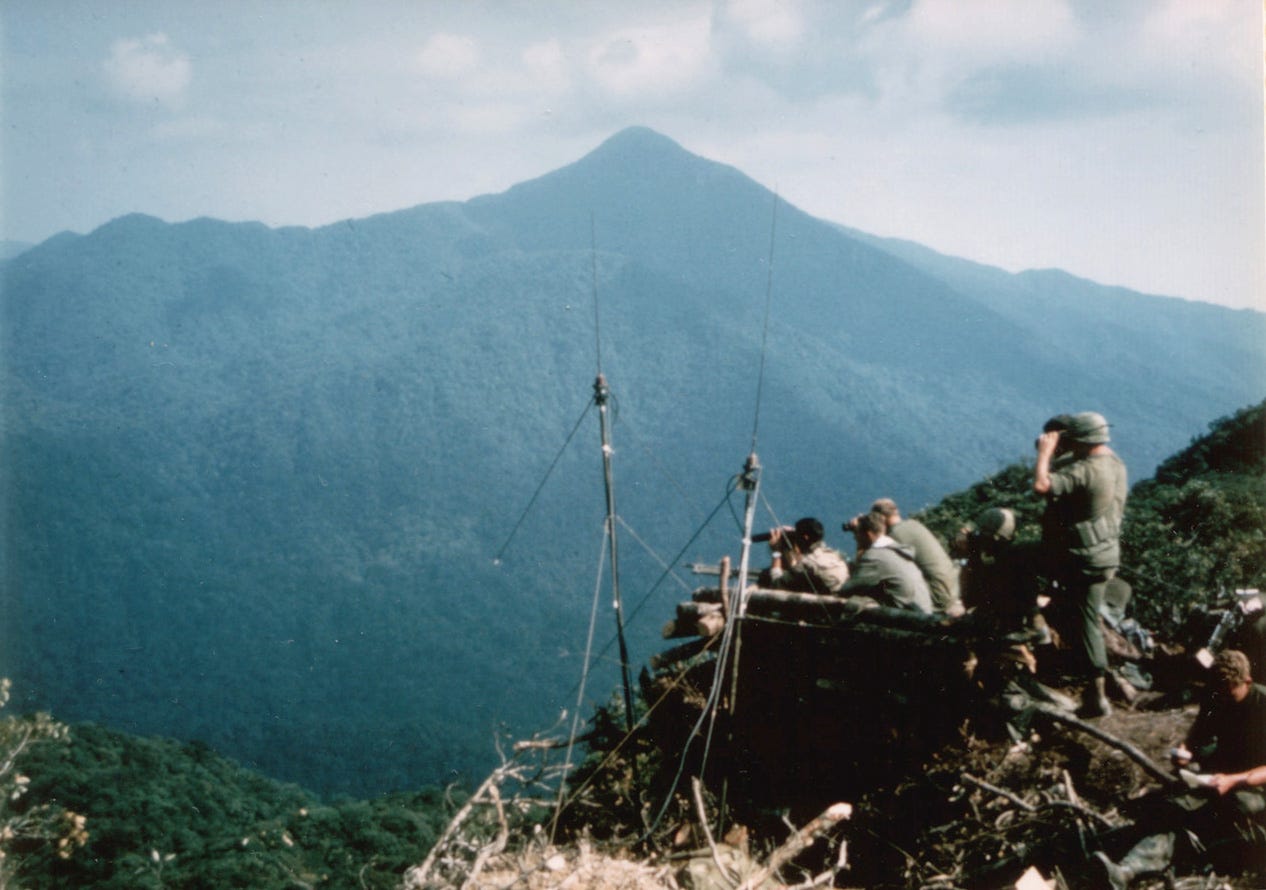
The Daen Lao mountain range region became significant due to the Laotian Civil War (1959–1975) and related ethnic insurgencies. During this conflict, the area was strategically important as it lay near the borders of Laos, Thailand, and Myanmar, and was part of the broader Indochina Cold War battleground.
The Laotian Civil War was fought between the communist Pathet Lao, supported by North Vietnam, and the Royal Lao Government backed by the US and its allies. The North Vietnamese used parts of Laos as a supply corridor (the Ho Chi Minh Trail) for operations in South Vietnam. Various hill tribe groups, including the Hmong—who lived in the highland regions near the Daen Lao range—were recruited and trained by the CIA and US Special Forces to fight guerrilla warfare against the communists.
During this period, many Hmong and other ethnic minorities from these highlands engaged in intense fighting and suffered persecution after the war ended with the communist takeover in 1975. The region witnessed refugee flows into Thailand and continued ethnic insurgencies by groups resisting the new government. This area’s difficult terrain and ethnic compositions have contributed to its long history of conflict well beyond World War II.